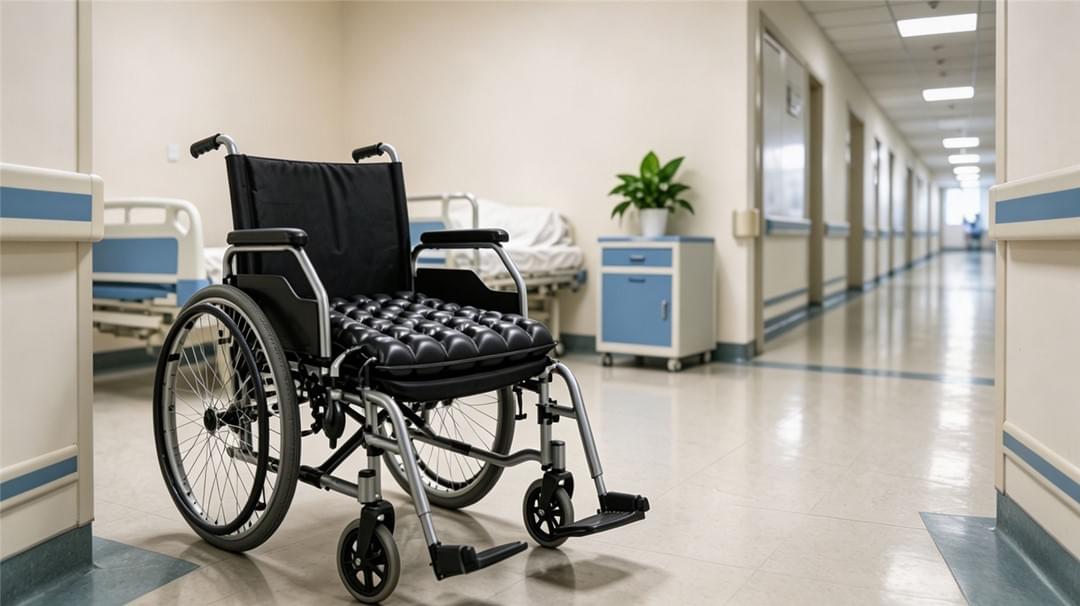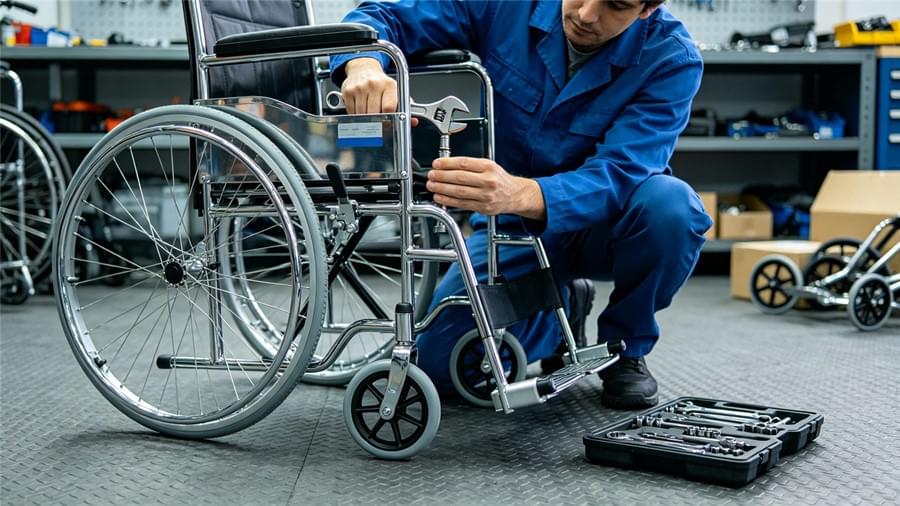
From procurement to replacement: a complete manual wheelchair maintenance and lifecycle strategy that reduces total cost of ownership by 30-50%, extends equipment service life by 40-60%, and turns after-sales service into a profit center. Based on the WHO 2023 framework and real distributor data from 30+ countries.
Manual Wheelchair Maintenance: The True Cost of Neglect
Most hospitals and distributors still see wheelchair procurement as a one-time purchase—buy, deliver, and move on. But the real cost is not the purchase price. It is the total cost of ownership across the full lifecycle of manual wheelchair maintenance, where maintenance quality ultimately determines service life, safety, and long-term operating cost.
Consider two hospitals, each operating 500 manual wheelchairs:
Average wheelchair lifespan: 2.8 years. Annual emergency repair cost: $85/wheelchair. Replacement rate: 35% of fleet per year. Total 10-year cost: $1.42M.
Average wheelchair lifespan: 5.2 years. Annual maintenance cost: $40/wheelchair. Replacement rate: 18% per year. Total 10-year cost: $0.94M.
The difference is $480,000 over 10 years. This is not a theoretical figure — it is based on real fleet data from our distributor partners managing hospital equipment across Southeast Asia, the Middle East, and Africa. Proper manual wheelchair maintenance does not add cost; it reduces total operating cost over time.
The Wheelchair Lifecycle: From Procurement to Replacement
A manual wheelchair’s lifecycle has five distinct phases. Each phase presents both risks and cost-saving opportunities. Understanding this lifecycle is the foundation of effective wheelchair fleet management.
The WHO’s 2023 Wheelchair Service Provision Guidelines — adopted by healthcare systems in 47 countries — formalizes this lifecycle approach. The framework emphasizes that wheelchair repair and maintenance are not afterthoughts but an integral part of service delivery. For distributors, each lifecycle phase is a revenue touchpoint. For hospitals, each phase is a cost control opportunity.
Most dealers only monetize Phase 1 (procurement). But Phases 3-5 generate recurring revenue at higher margins. A dealer selling 200 wheelchairs annually can add $30,000-$60,000 in yearly maintenance contract revenue within 3 years. The wheelchair distributor after-sales model is your most defensible competitive advantage.
Wheelchair Procurement: Spec Decisions That Affect Maintenance Cost for Years
The cheapest wheelchair to buy is rarely the cheapest to own. Wheelchair procurement decisions made at the point of purchase determine 70-80% of your total cost of ownership over the equipment’s lifecycle. Here’s what experienced fleet managers look for.
Frame Material: Steel vs. Aluminum vs. Carbon Steel
Chrome-plated steel: Lowest purchase price ($80-120), but rusts in humid climates. Corroded frames fail structural safety tests within 2-3 years in tropical hospitals. Carbon steel with powder coating: Mid-range ($120-180), excellent corrosion resistance, 5+ year lifespan with proper care. Aluminum alloy: Premium ($150-250), lightweight, naturally rust-resistant, longest service life in institutional settings.
Satcon’s recommendation for hospitals: Carbon steel powder-coated frames offer the best TCO balance for fleet use.
Tire Type: Pneumatic vs. Solid (Flat-Free)
Pneumatic tires: Better shock absorption, lower rolling resistance, but require monthly pressure checks and periodic replacement. Flat tires are the #1 service call. Solid polyurethane tires: Zero maintenance, never go flat, but a harder ride and 15-20% higher rolling resistance. For hospital fleets where convenience outweighs comfort, solid tires reduce maintenance labor by 40%.
For distributors: Stock both types. Offer solid tires as a “low-maintenance upgrade” — it’s an easy upsell that saves your clients money long-term.
Procurement Checklist: 7 Questions That Determine Lifecycle Cost
Manual Wheelchair Maintenance Checklist: Component-by-Component
This wheelchair maintenance checklist is built on the WHO 2023 guidelines and adapted for institutional and distributor use. Every component has a defined inspection interval, failure mode, and cost impact — because maintenance decisions are business decisions.
Tire & Wheel Assembly
Flat tires account for 40% of emergency wheelchair service requests. For a hospital with 500 wheelchairs, that’s 200+ service calls per year — each costing $25-60 in labor and parts. Wheelchair tire maintenance and timely replacement is the single highest-ROI maintenance activity.
Brake System
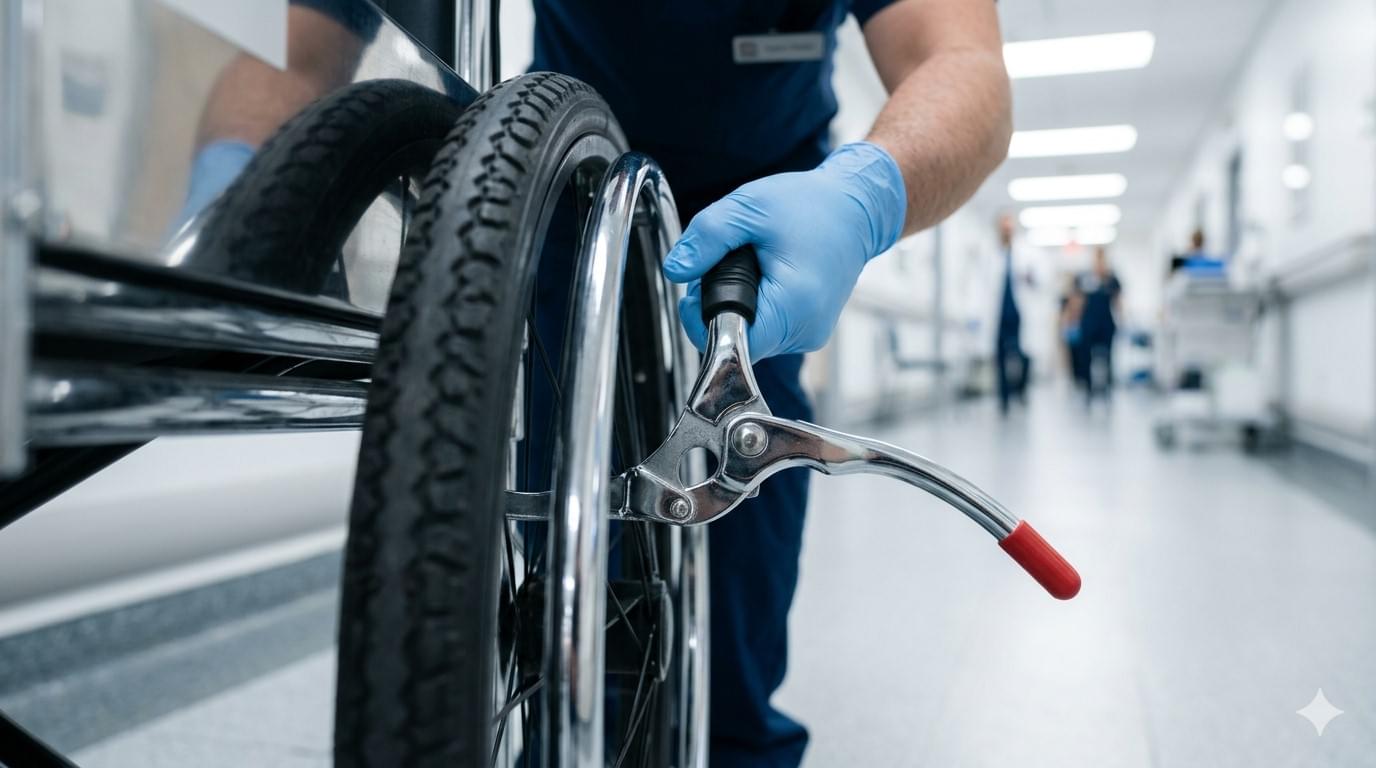
Brake failure is the leading cause of wheelchair-related injuries in hospitals. Wheelchair brake adjustment isn’t optional maintenance — it’s a liability imperative. A single injury lawsuit can exceed the cost of maintaining your entire fleet for a decade.
ISO 7176-3 requires parking brakes to hold a loaded wheelchair (100kg) on a 5° incline. If your fleet can’t pass this test, you’re exposed to regulatory action and liability claims. Document all brake inspections.
Bearing & Drivetrain
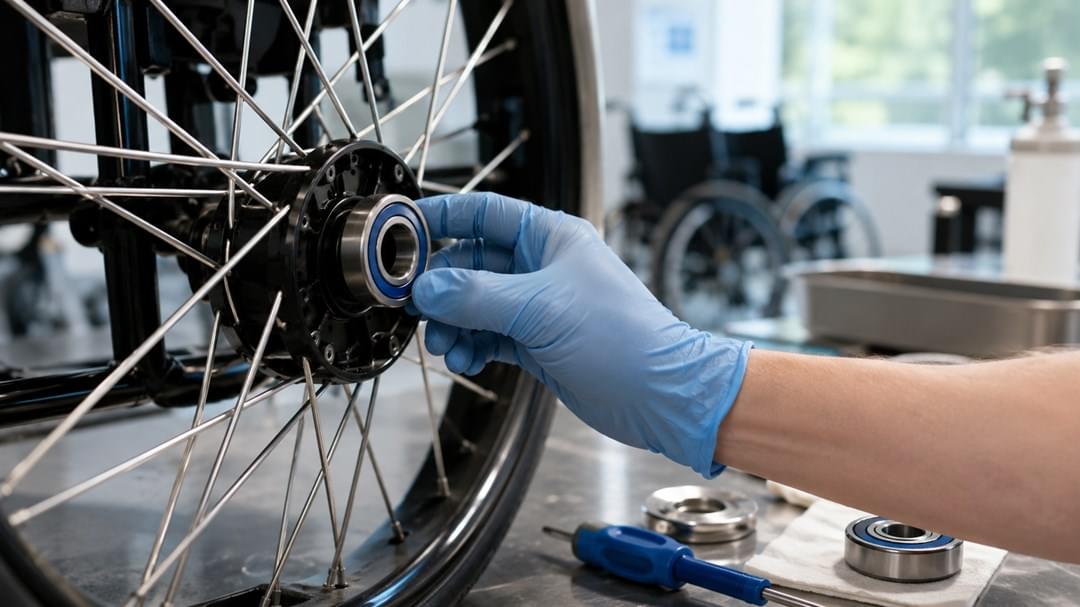
Worn bearings increase rolling resistance by 30-50%, making the wheelchair harder to propel. For patients with limited upper body strength, this means reduced mobility and increased caregiver burden. Wheelchair bearing lubrication is one of the simplest, cheapest maintenance activities — and one of the most neglected.
Cushion & Seating System
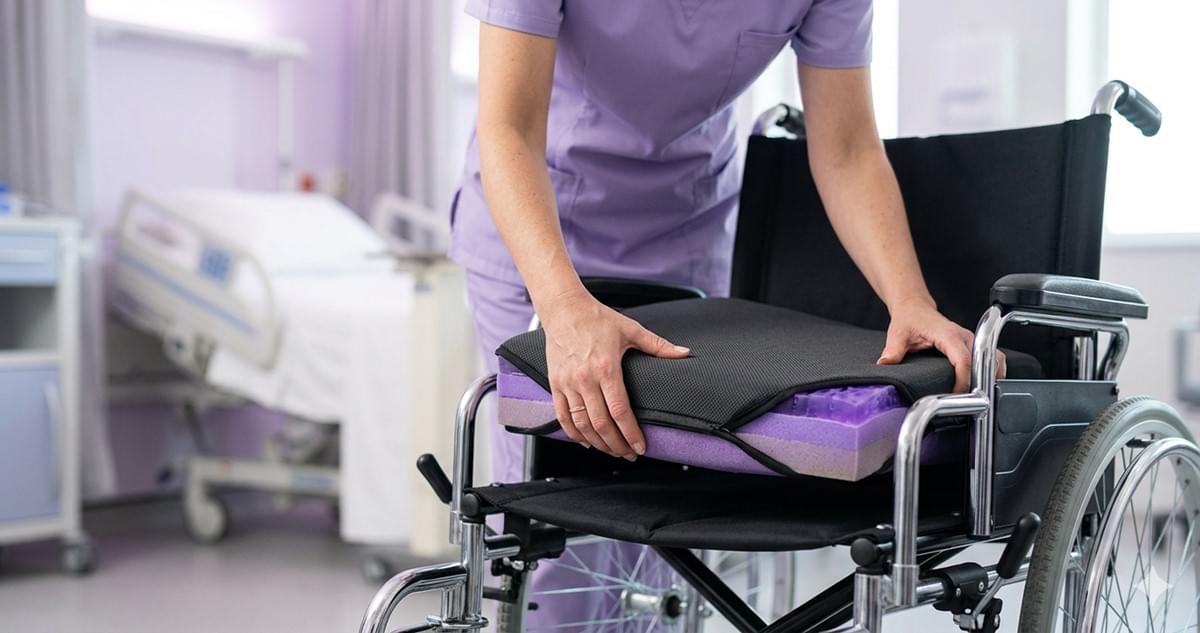
Pressure injuries affect 23-30% of long-term wheelchair users and cost healthcare systems $20,000-$150,000 per case to treat. Wheelchair cushion maintenance isn’t just equipment care — it’s clinical prevention. For hospitals, a single pressure injury lawsuit can exceed the cost of replacing every cushion in the building.
Frame & Structural Hardware
Frame cracks are non-repairable. Any structural damage means immediate wheelchair retirement. The manual wheelchair care guide rule: document every frame inspection, and photograph any suspect areas for your liability records.
Wheelchair After-Sales Service: Turn Maintenance Into Your Most Profitable Revenue Stream
If you’re only selling wheelchairs, you’re leaving 60% of your potential revenue on the table. The wheelchair after-sales service model transforms your business from a one-time transaction into a recurring revenue engine with 60-70% gross margins.
The Revenue Math
Annual maintenance contract = 10-15% of wheelchair purchase price. A $400 wheelchair = $40-60/year in recurring revenue. With 500 active contracts, that’s $20,000-$30,000/year at 60-70% gross margin.
Compare: equipment sales margins are typically 15-25%. Maintenance margins are 3x higher.
The Retention Effect
Dealers with active maintenance programs see 85%+ contract renewal rates. Each maintained wheelchair becomes a relationship that blocks competitors from entering the account. When the customer needs new wheelchairs, who do they call? The dealer who’s already maintaining their fleet.
Spare Parts Upsell
Every maintenance visit drives spare parts revenue — tires, bearings, brake pads, cushions. Parts margins are 40-50%, and a trained technician on-site identifies needs before failures occur. As a wheelchair spare parts supplier, Satcon Medical offers wholesale pricing and rapid replenishment for partner distributors.
4 Steps to Build Your After-Sales Program
WHO offers wheelchair service provision courses online. At Satcon, we provide technical documentation, video training modules, and remote support for all partner distributors. A competent technician can service 8-10 wheelchairs per day.
Basic: Quarterly inspection, written report ($30-40/yr per wheelchair). Standard: Monthly inspection + 10% parts discount ($50-60/yr). Premium: Unlimited service calls + loaner wheelchair during repair + priority parts ($80-120/yr). Most hospital clients choose Standard or Premium.
Fast-moving parts: tires (24″ × 1″, 24″ × 1-3/8″), tubes, bearings (6201, 6202), brake pads, cushion covers. Keep a 30-day inventory on hand. As a wheelchair spare parts supplier, Satcon ships from Beijing within 48 hours for standard orders.
Every wheelchair gets a service history: purchase date, warranty status, service dates, parts replaced, and technician notes. This isn’t just good practice — it’s your renewal sales tool. When clients see the documented value of maintenance, they renew.
Hospital Wheelchair Fleet Management: Compliance, Safety & Cost Control
Managing a hospital wheelchair maintenance program is fundamentally different from maintaining a single personal wheelchair. You’re responsible for regulatory compliance, infection control, patient safety, and budget accountability — across hundreds of units with different ages, conditions, and usage patterns.
Regulatory Compliance
Joint Commission standards require documented medical equipment safety programs. OSHA and CMS guidelines reference equipment safety protocols. A wheelchair involved in a patient injury without a documented maintenance history is a major liability exposure. Your maintenance program is your legal defense.
Infection Control
Wheelchairs are high-touch, shared-patient surfaces. Hospital-acquired infections cost $10,000-$50,000 per case. Maintenance schedules must include EPA-registered hospital-grade disinfection between patients. Cushion covers should be changed and laundered daily in clinical settings.
Wheelchair Fleet Management Best Practices
Tag every wheelchair with a unique ID (RFID or barcode). Track location, condition, next service date, and total maintenance cost per unit. Systems pay for themselves in reduced loss (5-8% annual wheelchair “disappearance” is common in large hospitals) and improved utilization rates.
Most hospitals own 30-40% more wheelchairs than they need because they can’t locate available units. RFID tracking typically reduces fleet size by 20-25% while maintaining the same service level — that’s $20,000-$40,000 in avoided procurement per 100 tracked units.
Nurses and transport staff don’t need to be mechanics, but they must recognize: brake not holding, tire visibly flat, wheel wobbling, cushion torn, frame cracked. If any of these are observed, the wheelchair must be removed from service immediately and reported to maintenance.
When to Repair vs. Replace: A Cost-Based Decision Framework
Not every broken wheelchair deserves a repair. And not every aging wheelchair needs replacement. The decision should be driven by data, not habit. Here’s the framework we recommend to our distributor partners.
The 50% Rule
If a repair costs more than 50% of the wheelchair’s current replacement value, replace it. Here’s why: a wheelchair that needs a major repair is statistically more likely to need additional repairs within 6 months. You’re not saving money — you’re deferring the inevitable at a higher total cost.
Repair cost < 50% of replacement value • Wheelchair age < 4 years (well-maintained) • Frame is structurally sound • No history of recurring issues
Frame crack or structural damage (always) • Repair cost > 50% of replacement value • Wheelchair age > 5 years with declining condition • Multiple component failures in same 6-month period • Corrosion compromising structural integrity
For distributors, this framework is a sales tool. When a client’s wheelchair reaches end-of-life, you’re the natural replacement supplier — especially if you’ve been maintaining their fleet. For hospitals, budget planning should include a wheelchair replacement schedule based on fleet age distribution, not emergency replacements that blow through capital budgets.
To support this lifecycle approach, we also provide a full range of manual wheelchairs backed by a structured after-sales system, including spare parts supply and maintenance support.
Explore our manual wheelchair series designed for hospitals, distributors, and long-term care facilities at Satcon Medical.
Ready to Optimize Your Wheelchair Lifecycle Management?
Satcon Medical supplies ISO-certified manual wheelchairs, spare parts, and technical support to distributors and healthcare facilities in 30+ countries. Whether you’re building an after-sales program or planning a fleet replacement cycle, we can help.
10+ years in wheelchair manufacturing • ISO 13485 / CE / FDA certified • Beijing headquarters