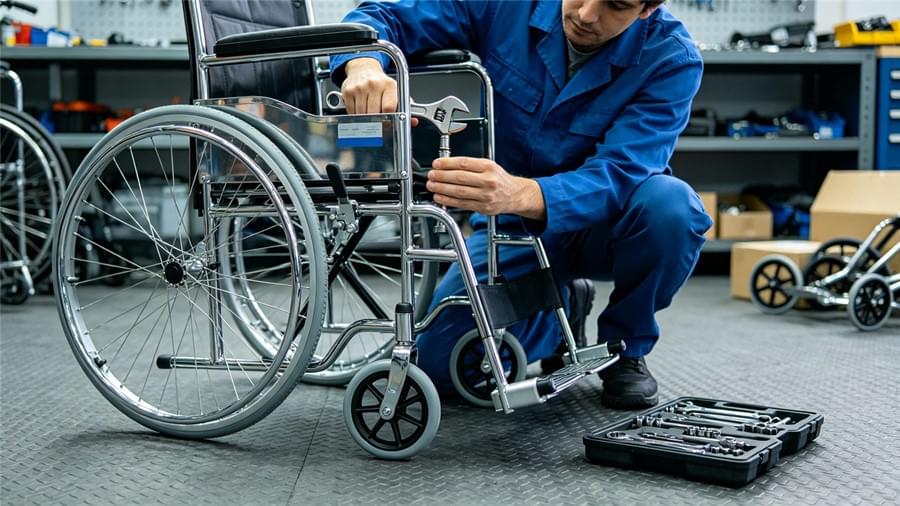
A focused wheelchair tire maintenance guide covering PU solid vs. pneumatic selection, five common failure points, repair-vs-replace cost modeling, and bulk procurement checklist. Reduce fleet tire costs by up to 35% with the right strategy.
Why Wheelchair Tire Failure Accounts for 40% of Fleet Maintenance Costs
As outlined in our complete manual wheelchair maintenance guide, flat tires are the single largest source of emergency service calls — accounting for roughly 40% of all wheelchair repair requests. For a hospital operating 500 wheelchairs, that translates to over 200 tire-related service calls per year, each costing $25–$60 in labor and parts.
The irony: tire maintenance is the cheapest component to service, yet the most expensive to neglect. A proactive wheelchair tire maintenance program — regular pressure checks, scheduled rotations, and bulk replacement at optimal intervals — consistently delivers the highest ROI of any wheelchair maintenance activity.
PU Solid vs. Pneumatic: Front & Rear Tire Selection for Clinical Environments
Most manual wheelchairs use a split configuration: small front casters for maneuverability, large rear wheels for comfort. The tire type you choose for each position directly determines maintenance frequency, replacement cost, and user experience. Here’s the breakdown:
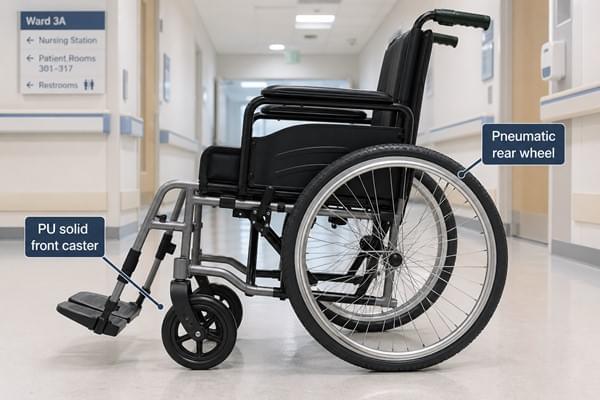
For facility managers, the practical takeaway is clear: PU solid-front casters are the default for a reason — small-diameter pneumatic tires are extremely difficult to repair when punctured, and the maintenance labor cost outweighs any comfort gains. Rear wheels are where the pneumatic vs. solid decision genuinely matters, and should be matched to your facility’s primary usage environment.
5 Common Wheelchair Tire Failure Points & How to Prevent Them
Understanding failure modes is the first step to reducing them. Each of these five points is preventable with a structured wheelchair tire maintenance protocol — as detailed in the component-by-component maintenance checklist from our pillar guide:
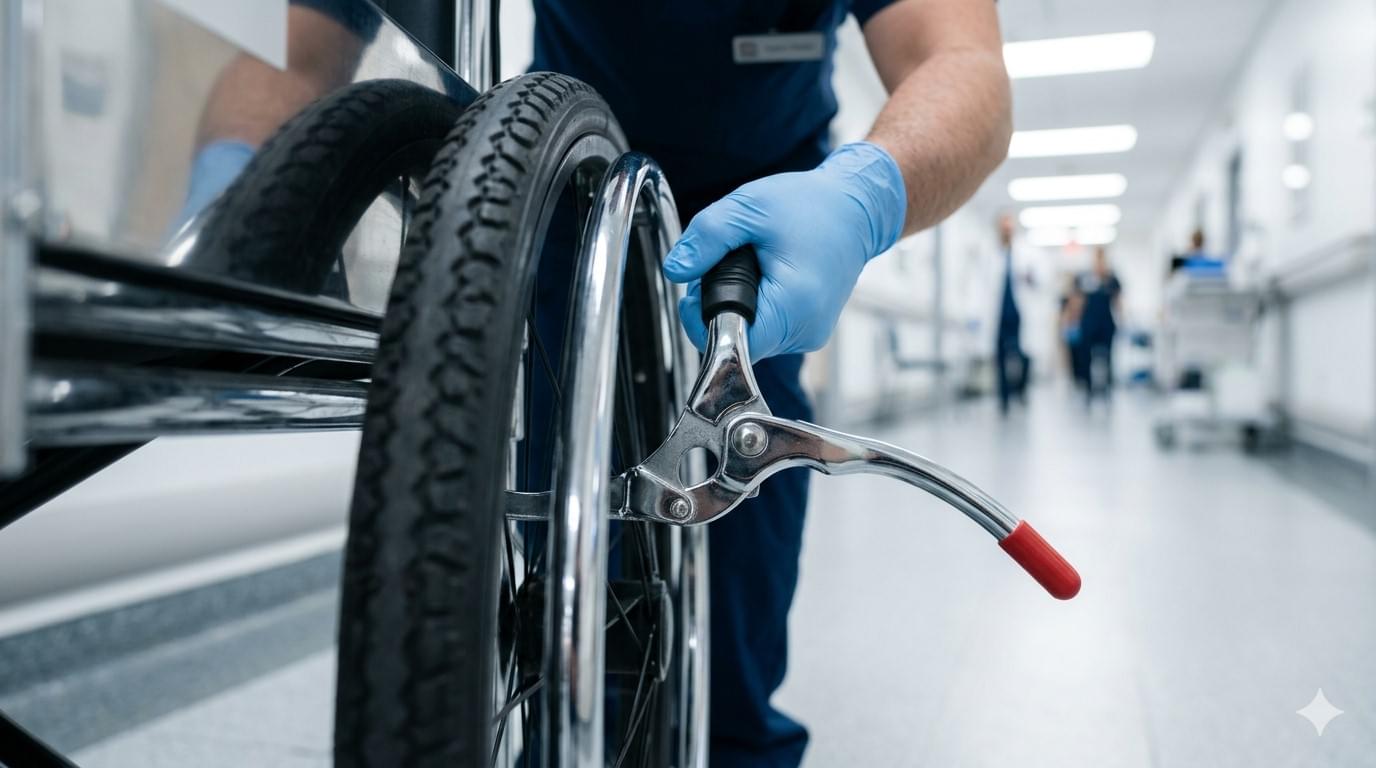
Replace when tread depth drops below 1.5mm. PU solid tires develop flat spots — rotate or replace immediately once visible. Inspect every 30 days.
High-risk areas: outdoor paths, construction zones, parking lots. Solution: switch to PU solid for puncture-prone routes, or stock patch kits ($2 each) for pneumatic rear wheels.
Rubber valve cores degrade over 18 months, causing slow leaks. Replace proactively at $0.30 each during scheduled maintenance — don’t wait for the flat.
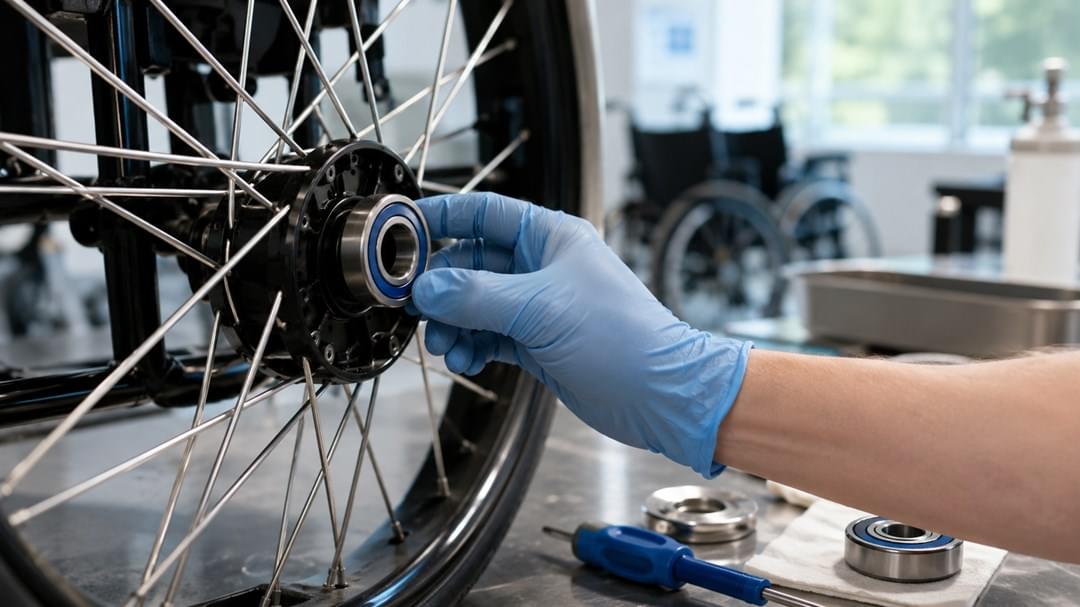
One-sided tread wear signals axle misalignment or bearing degradation. Check wheel alignment quarterly — bearing replacement at $5-8 each is cheaper than premature tire replacement at $15.
Tire-rim bond failure is common in high-temperature, high-humidity environments (Middle East, Southeast Asia). Powder-coated rims reduce this risk. Monthly visual inspection in tropical climates.
Repair vs. Replace: A Cost Decision Framework for Facility Managers
Applying the 50% repair-vs-replace rule from our lifecycle guide to tire decisions creates a clear, data-driven framework:
| Puncture repair (single) | $5–8 parts + $20 labor = $25–28 total |
| New pneumatic tire (single) | $8–15 parts + $15 labor = $23–30 total |
| New PU solid tire (single) | $12–18 parts + $15 labor = $27–33 total |
| Bulk tire order (50+ units) | 15–25% discount on per-unit cost + scheduled replacement = lowest TCO |
The bottom line: when a single puncture repair costs nearly the same as a brand-new tire, the decision is obvious — replace, don’t patch. And when 20%+ of your fleet’s tires reach their replacement cycle simultaneously, a bulk order from a reliable wheelchair tire supplier saves 15–25% over individual purchases. Schedule bulk replacements quarterly based on fleet age distribution, not emergency reactions.
Satcon Wheelchair Tire Options: Standard & Custom for B2B Buyers
Every Satcon manual wheelchair ships with a tire configuration optimized for institutional use. Custom options available for distributors with specific market requirements:
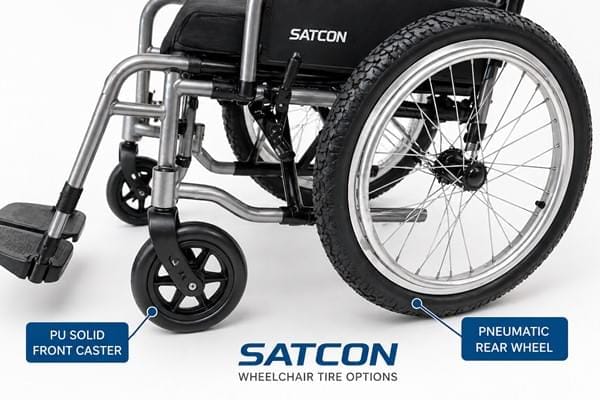
6″ or 8″ PU solid tire — zero maintenance, never flats. Default on all Satcon manual wheelchairs unless pneumatic is specified.
16″ / 22″ / 24″ pneumatic tire with inner tube — best shock absorption for patient comfort. 35–45 PSI standard pressure range.
Anti-static wheels (OR/ICU), heat-resistant PU (Middle East/Africa), branded tire colors, solid rear tires for low-maintenance fleet contracts.
Bulk Tire Procurement Checklist: 5 Questions Every Buyer Must Ask
Before your next bulk order of wheelchair tires, send these five questions to your supplier. Their answers reveal everything about long-term reliability:
Need a Reliable Wheelchair Tire Supplier for Your Fleet?
Satcon Medical supplies PU solid and pneumatic wheelchair tires to distributors and healthcare facilities in 30+ countries. Standard sizes in stock. Custom configurations available. Get a quote within 24 hours.
WhatsApp: +86 183 3183 3767 | MOQ: 50 tires | Lead time: 7–15 days