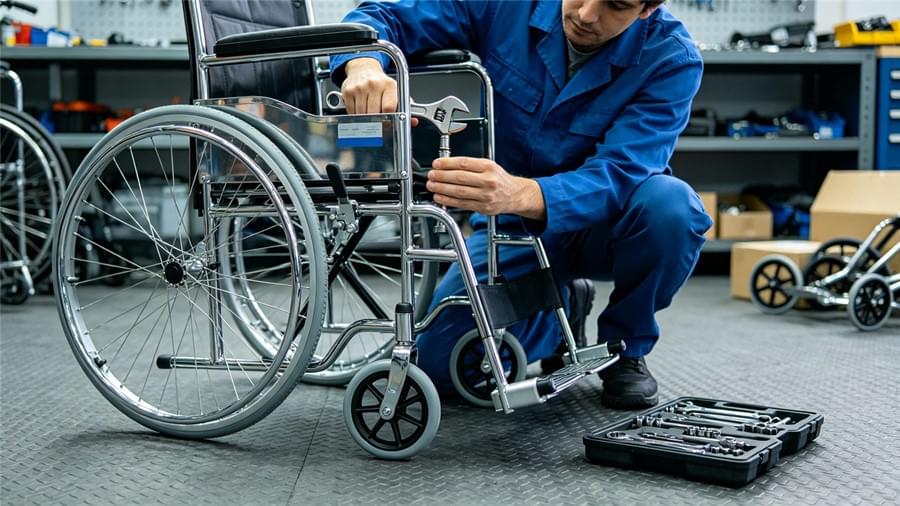
A focused wheelchair cushion replacement guide covering foam vs. gel vs. air selection, five critical signs of degradation, lifespan-based replacement scheduling, and a bulk procurement checklist. Properly timed cushion replacement reduces pressure injury incidence by up to 50% across institutional fleets.
pressure injury prevention cushion
foam vs gel wheelchair cushion
wheelchair cushion supplier
01 The Clinical Cost
Why Delayed Wheelchair Cushion Replacement Causes 50% of Preventable Pressure Injuries
Tire failures cost money. Brake failures risk falls. Cushion failures harm patients directly. As outlined in our complete manual wheelchair maintenance guide, the cushion is the single component that determines whether a patient develops a pressure injury, and degraded cushions are the leading preventable cause of pressure ulcers in institutional wheelchair users. Unlike any other wheelchair component, cushion failure produces measurable clinical harm within days, not months.
The cost asymmetry is extreme: a wheelchair cushion replacement costs $20–130 depending on type. A single Stage 3 pressure injury costs $20,000–$150,000 to treat. No other wheelchair maintenance decision carries a 200:1 consequence ratio. Cushion replacement is not a budget line item — it is a patient safety protocol with direct clinical and legal implications.
02 Cushion Selection
Foam vs. Gel vs. Air: Which Wheelchair Cushion Type Fits Your Clinical Environment?
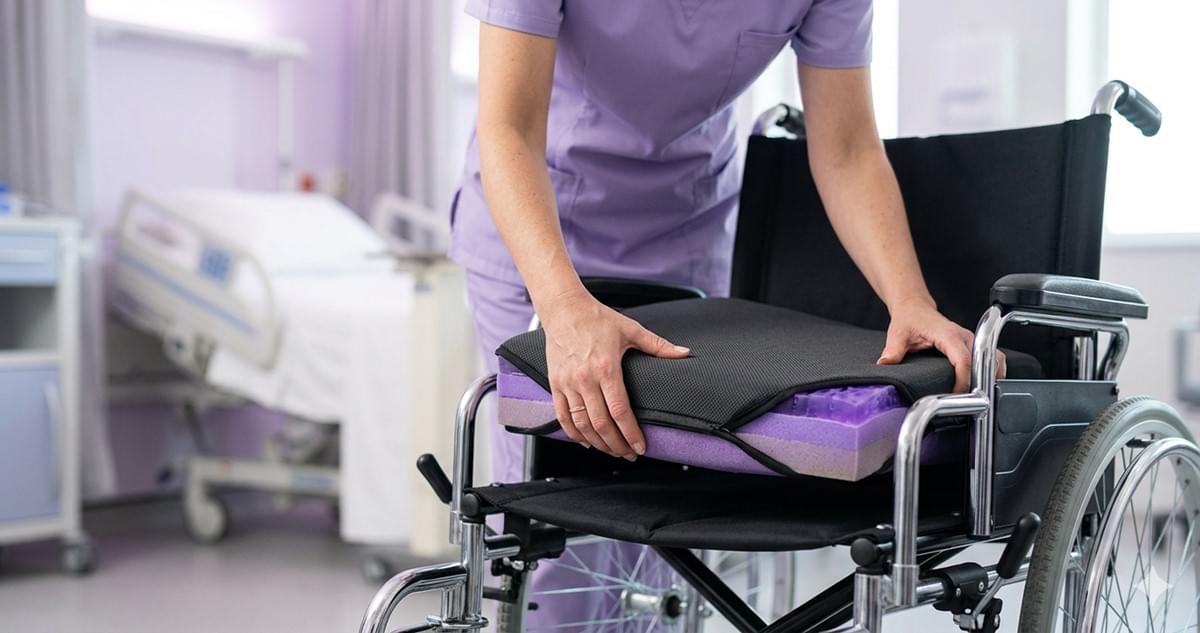
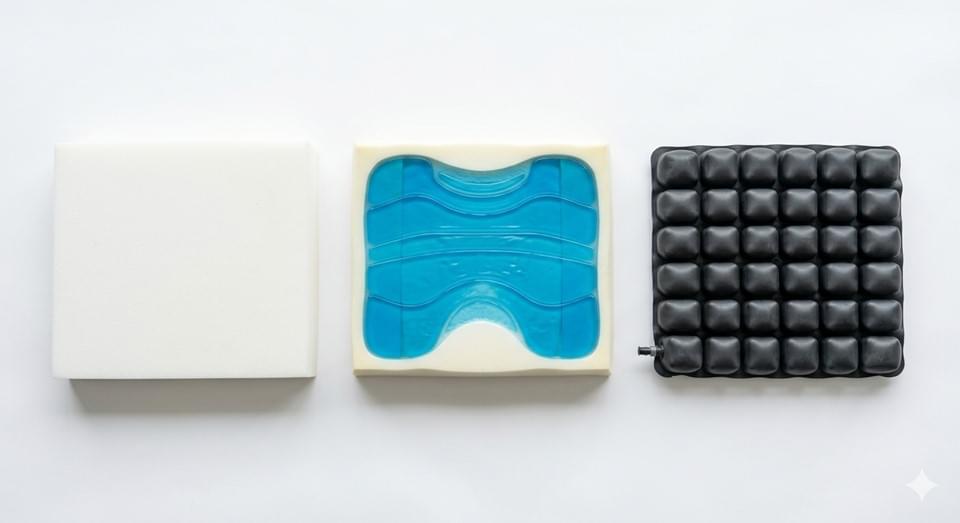
The foam vs gel wheelchair cushion decision — and whether air enters the conversation — depends entirely on your patient population and how long each patient sits per day. Selecting the wrong cushion type for your clinical environment creates either unnecessary cost or preventable harm:
| Cushion Type | Best Environment | Maintenance Demand | Service Life |
|---|---|---|---|
| Foam (Polyurethane) | Short-term seating, discharge configurations, and low-budget facilities | Flip monthly; inspect for collapse at 6 months | 12–18 months |
| Gel (Gel-on-Foam Base) | Medium-duration seating, general wards, post-surgical recovery | Quarterly gel integrity check; cover wipe-down | 18–24 months |
| Air (Multi-cell Pneumatic) | ICU, high-pressure injury risk, long-duration seated patients | Daily pressure check; quarterly cell inflation test | 24–36 months |
| Hybrid (Foam + Gel) | High-turnover fleets, multi-use hospital wheelchairs | Lowest maintenance — combines foam stability with gel pressure relief | 18–24 months |
For institutional fleet managers, the practical starting point is clear: foam cushions are the default — they are inexpensive, universally available, and adequate for short-term and low-risk seating. But foam is also the fastest to degrade, and the first to cause harm when left in service past its effective lifespan. The foam vs gel wheelchair cushion decision for fleet stock comes down to patient contact hours: if patients sit more than 4 hours per session, gel or hybrid cushions deliver better pressure injury prevention outcomes measurably. The most expensive cushion is always the one that fails before it gets replaced.
03 Degradation Signs
5 Signs Your Wheelchair Cushion Needs Immediate Replacement
Every cushion that caused a pressure injury showed at least one of these five degradation signs before the incident — and was not acted upon. A structured wheelchair cushion maintenance inspection catches every one of these during a routine that takes under 60 seconds per wheelchair:
Slide your flat hand between the patient’s thigh and the cushion while seated. If you feel the hard seat pan through the foam, the cushion has collapsed past 70% of its original thickness and can no longer distribute pressure. This is the single most reliable field test — and it requires zero equipment. Wheelchair cushion replacement is the only corrective action; no amount of repositioning restores collapsed foam.
A cracked or torn cover allows body fluids, cleaning agents, and moisture to penetrate the cushion core. Once contamination reaches the foam or gel layer, the interior becomes a bacterial reservoir that no surface disinfection can address. Replacing the cover alone costs $8–15 and takes 2 minutes — but only if the core is intact. If the core is contaminated, the entire cushion must be replaced.
Gel cushions that develop visible leakage or leave residue on the cover are irreversibly compromised — there is no repair for a breached gel bladder. Air cell cushions that cannot hold the rated pressure for 24 hours have a leaking cell that cannot be field-repaired. Both conditions require full wheelchair cushion replacement; there is no intermediate service option.
One side of the cushion is significantly thinner or more compressed than the other, indicating either persistent patient leaning (postural asymmetry) or an unlevelled wheelchair frame. The cushion degradation is a symptom — replacing it without investigating the underlying cause guarantees the next cushion will degrade the same way. Check wheelchair frame alignment and patient positioning at the same inspection.
If a cushion retains odor or visible discoloration after a full cleaning and disinfection cycle, biological material has penetrated below the cover surface into the core material. Biofilm formation in foam is irreversible — the cushion cannot be returned to a hygienic state and must be replaced immediately. This is both a clinical infection control issue and a compliance risk during health inspection audits.
04 Cost Model
When to Replace: A Lifespan-Based Wheelchair Cushion Replacement Cost Model
Applying the component lifecycle framework from our maintenance guide to cushion decisions creates a stark cost comparison. The key insight: the most expensive wheelchair component is never the one you replace too soon — it is the one you replace too late.
| Foam cushion replacement (single) | $15–30 parts + $5 labor = $20–35 total |
| Gel cushion replacement (single) | $40–80 parts + $5 labor = $45–85 total |
| Air cell cushion replacement (single) | $80–120 parts + $10 labor = $90–130 total |
| Pressure injury treatment (Stage 2) | $20,000–$50,000 medical + legal cost |
| Pressure injury treatment (Stage 3–4) | $70,000–$150,000+ medical + legal cost |
| Bulk cushion order (50+ units) | 15–25% discount + scheduled replacement = lowest fleet TCO |
Replacement Policy: Hospital Wheelchair Cushions
The rule is absolute: Any hospital wheelchair cushion that is 6 months past its rated lifespan—or shows any of the five degradation signs—must be replaced immediately, regardless of its “look.”
Saving $50 by stretching a foam cushion from 18 to 24 months is a clinical gamble. That minor saving is eclipsed by the $50,000 liability and trauma of a single pressure injury.
For fleet managers: The only viable strategy is scheduled batch replacement based on each cushion’s rated interval, backed by a 60-second visual and tactile inspection during every quarterly service round.
05 Satcon Cushion Configurations
Satcon Wheelchair Cushion Options: Standard & Custom for B2B Buyers
Every Satcon manual wheelchair ships with a cushion configured for institutional durability. Replacement cushions and covers are available as standard spare parts — no special order processing, no extended lead times:
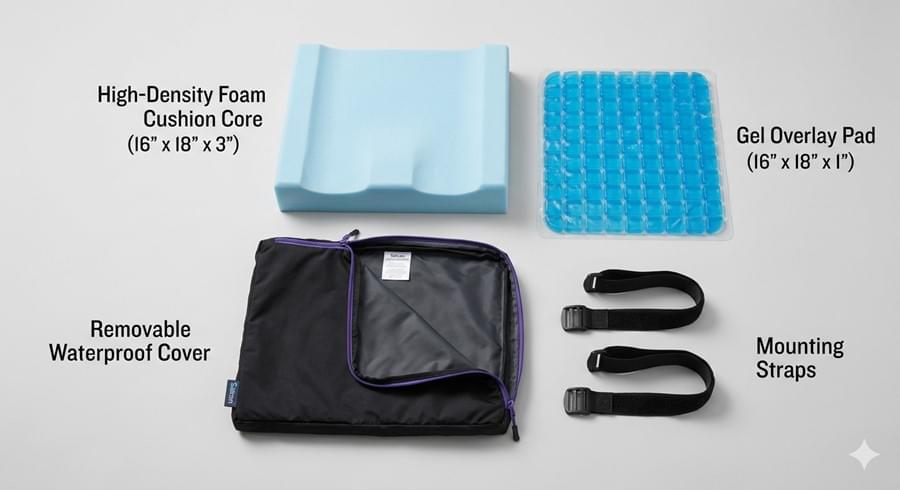
Fitted as standard on all Satcon manual wheelchair models. 2″ or 3″ high-density polyurethane foam with removable waterproof cover. Available in 16″×18″, 18″×16″, and 18″×18″ institutional sizes. Cover-only replacement available separately.
Foam base with integrated gel pressure-relief layer. Recommended for patients seated for more than 4 hours per session. The gel layer redistributes ischial tuberosity loading while the foam base provides structural stability. Available as a field-upgrade kit for existing fleet units.
Antimicrobial covers for ICU and surgical environments, custom seat depths for pediatric and bariatric models, branded cover printing, and color-coded fleet management schemes. Full OEM customization from 50-unit orders. Replacement covers are sold separately without MOQ.
06 Procurement Checklist
Bulk Wheelchair Cushion Procurement: 5 Questions Every Buyer Must Ask
Before your next bulk wheelchair cushion replacement order, send these five questions to your supplier. The answers determine whether your fleet’s cushion inventory is clinically adequate — or a latent liability:
1
2
3
4
5
Need a Reliable Wheelchair Cushion Supplier for Your Fleet?
Satcon Medical supplies foam, gel, and hybrid wheelchair cushions — including replacement covers — to distributors and healthcare facilities in 30+ countries. Standard institutional sizes in stock. Custom configurations for infection control available. Get a quote within 24 hours.
WhatsApp: +86 183 3183 3767 | MOQ: 50 cushions | Lead time: 7–15 days